Corptax
Tax obligation management · B2B SaaS
"How might we modernize the tax obligation management experience to make adoption feel effortless?"
Overview
The problem
Corptax already had a tax obligation management tool, but the UX was so difficult to navigate that users stopped using it. We needed to redesign the experience from the ground up — making it intuitive enough that users would actually want to switch, and easy enough that adoption felt natural.
Highlights
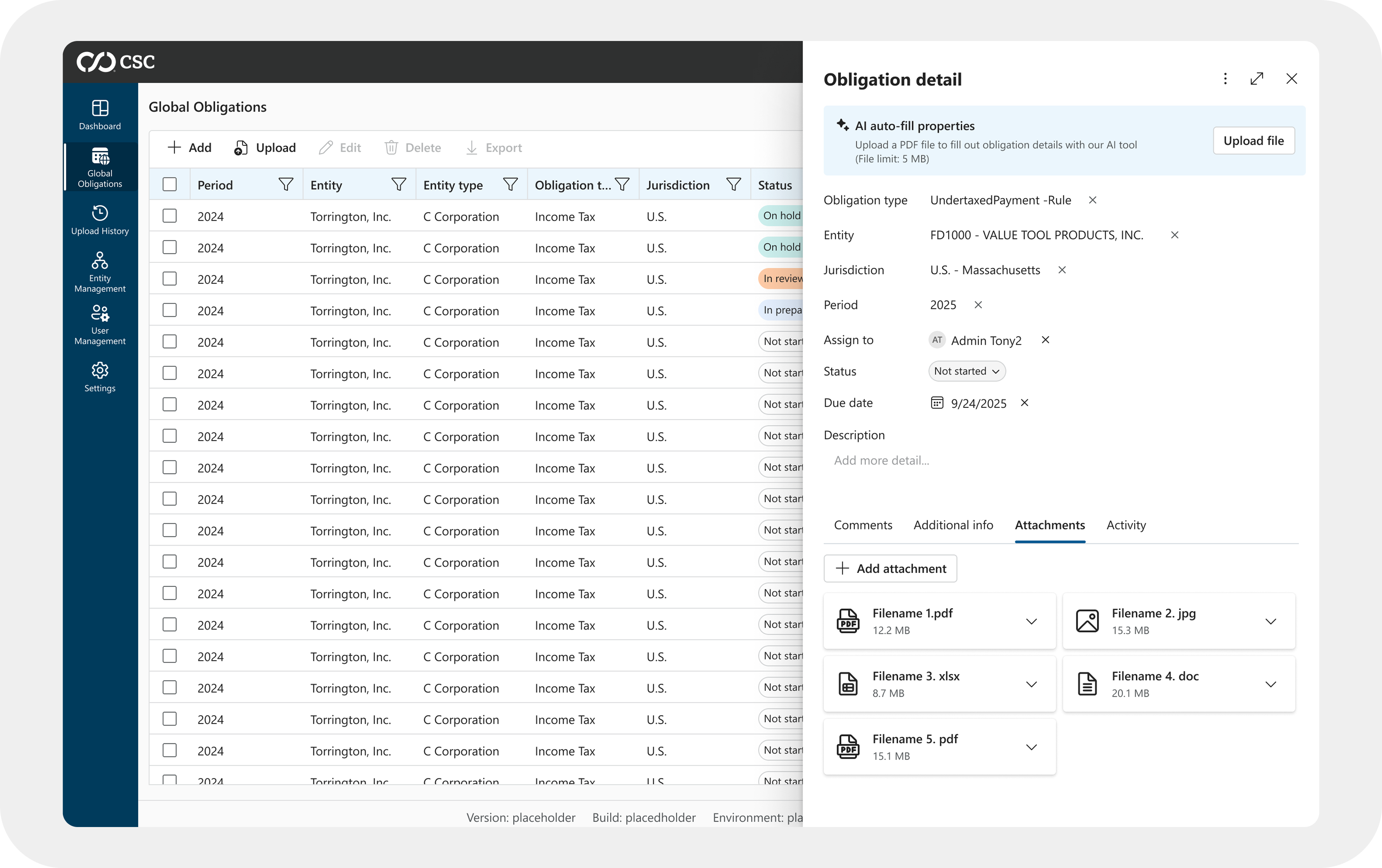
Global obligation
Where users manage each individual tax obligation across their entities. From this workspace, they can track forecasts, document taxes paid, assign owners, and set deadlines to keep obligations on schedule and compliant.
Dashboard
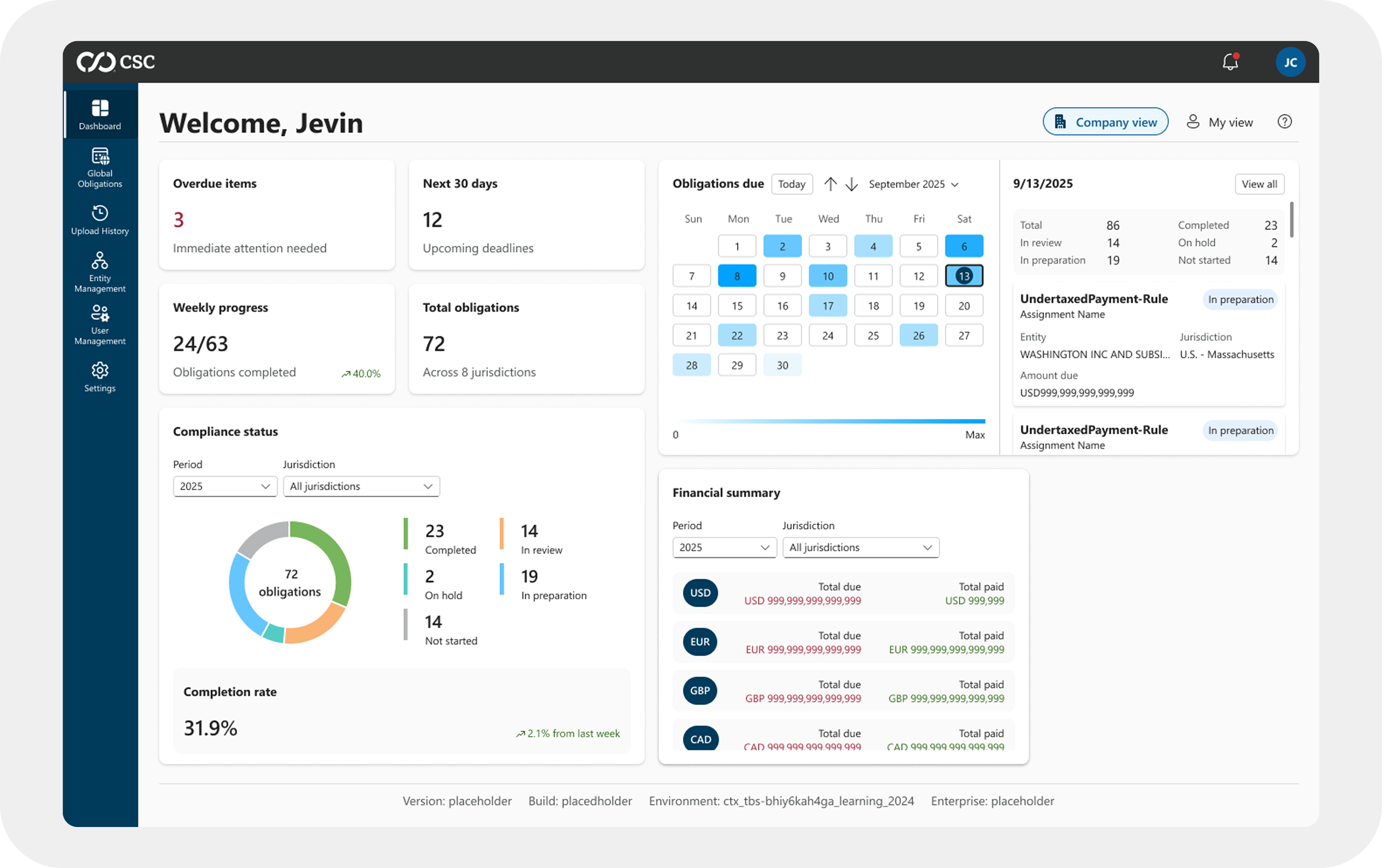
A high‑level overview of obligation health across the company, surfacing what's due, what's at risk, and where action is needed.
Data import
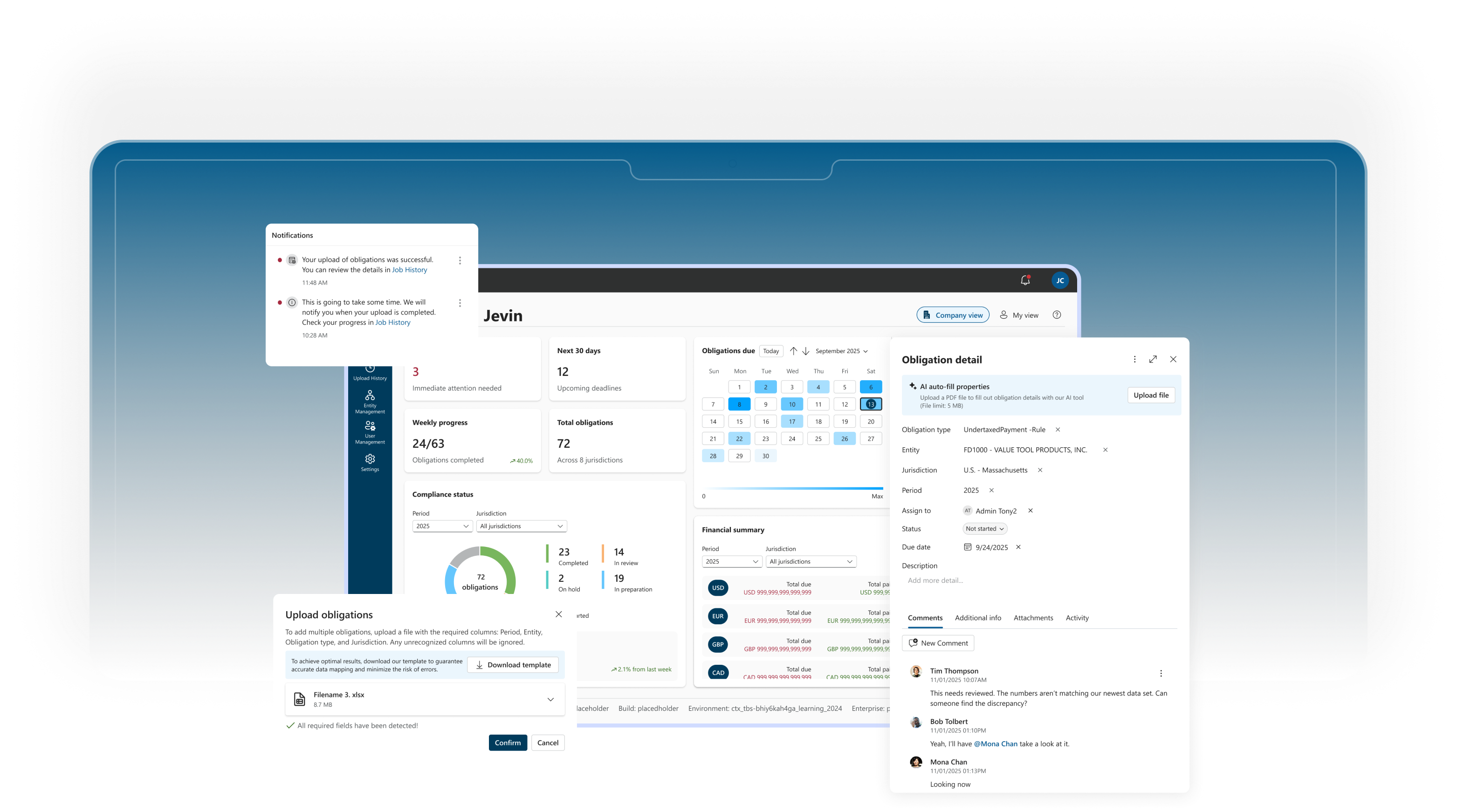
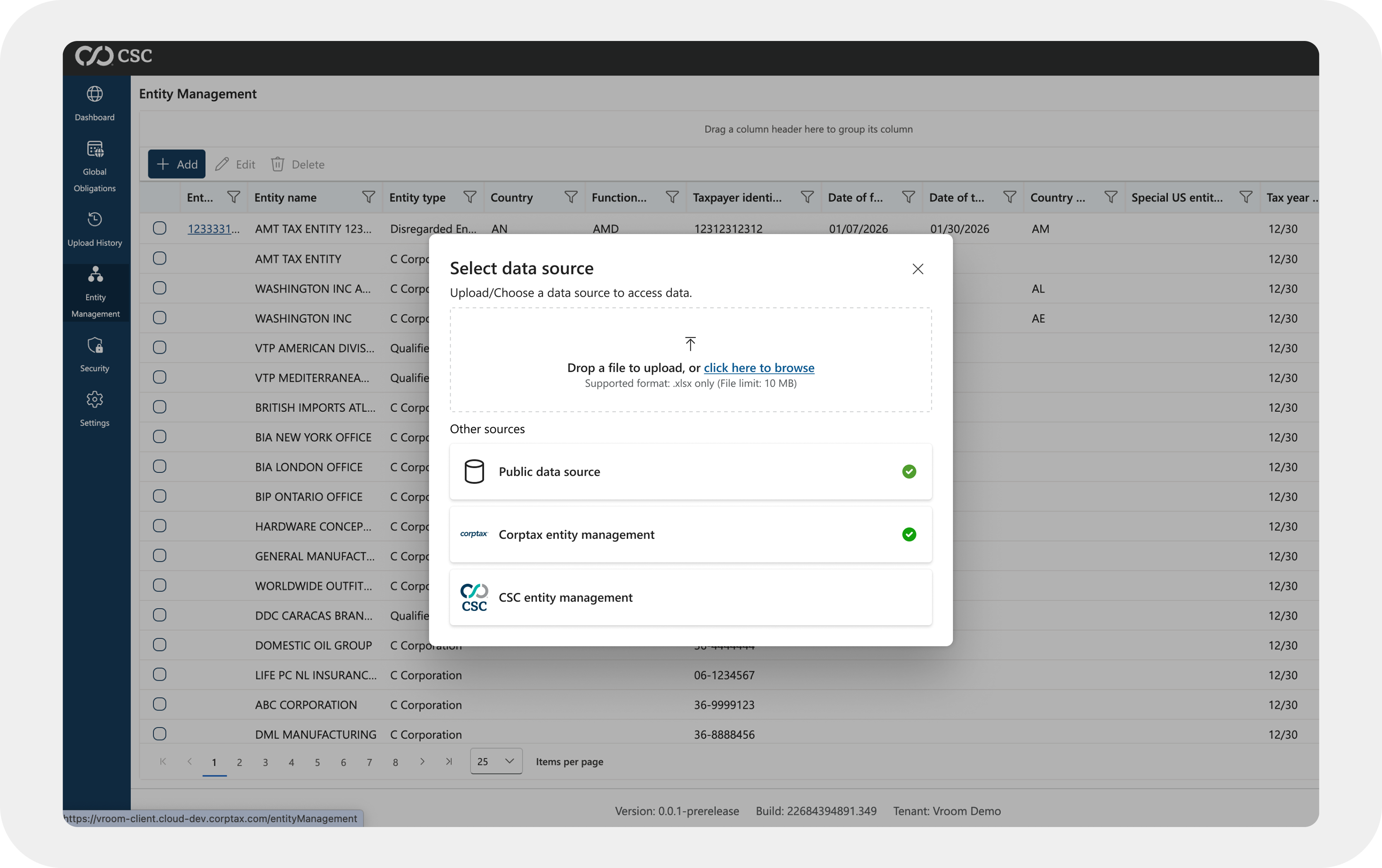
Streamlines how users add data to the system. Instead of entering records manually, users can upload files or connect to external data sources for a faster, more scalable experience.
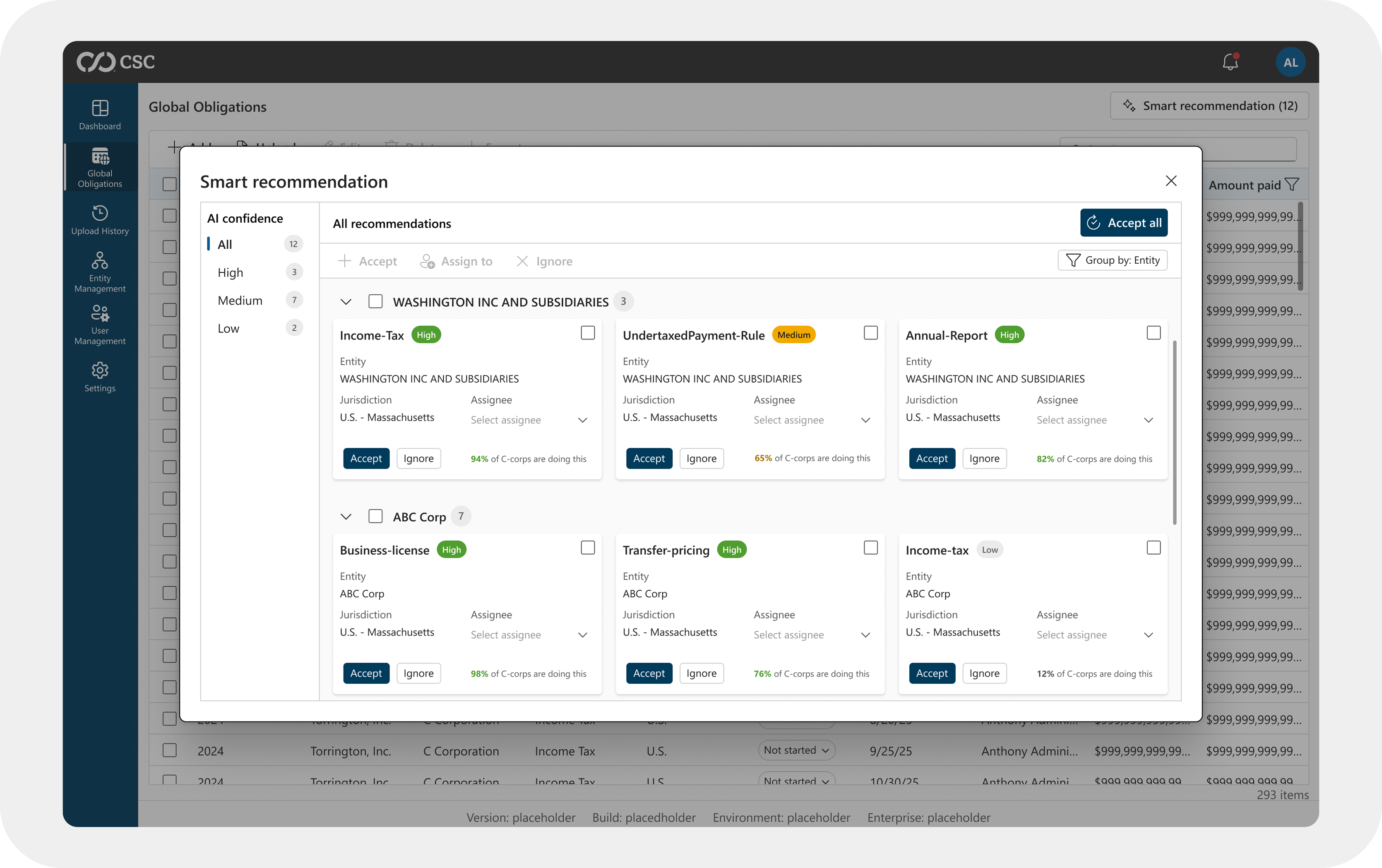
AI smart recommendation
We embedded AI capabilities to help companies stay compliant more efficiently. The system automatically suggests obligations that may be missing based on entity data and historical patterns.
Context
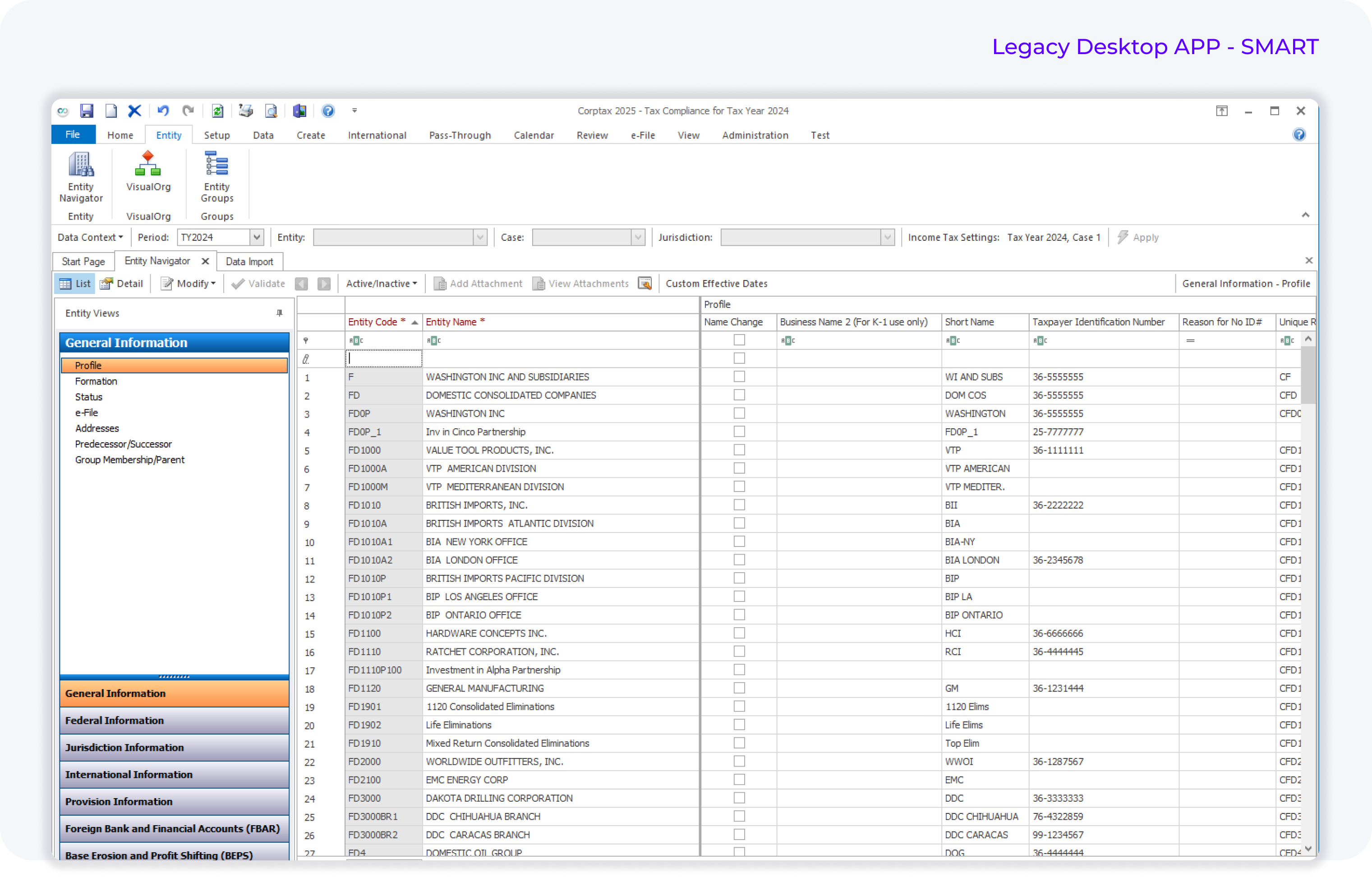
Moving from legacy desktop to Corptax Web
Corptax was making a company-wide shift toward web-first products — moving away from legacy desktop applications to deliver faster. The global tax software market reached $20.53B in 2025, and over 60% of it is now cloud-based, showing that web platforms have become the industry standard.
Problem
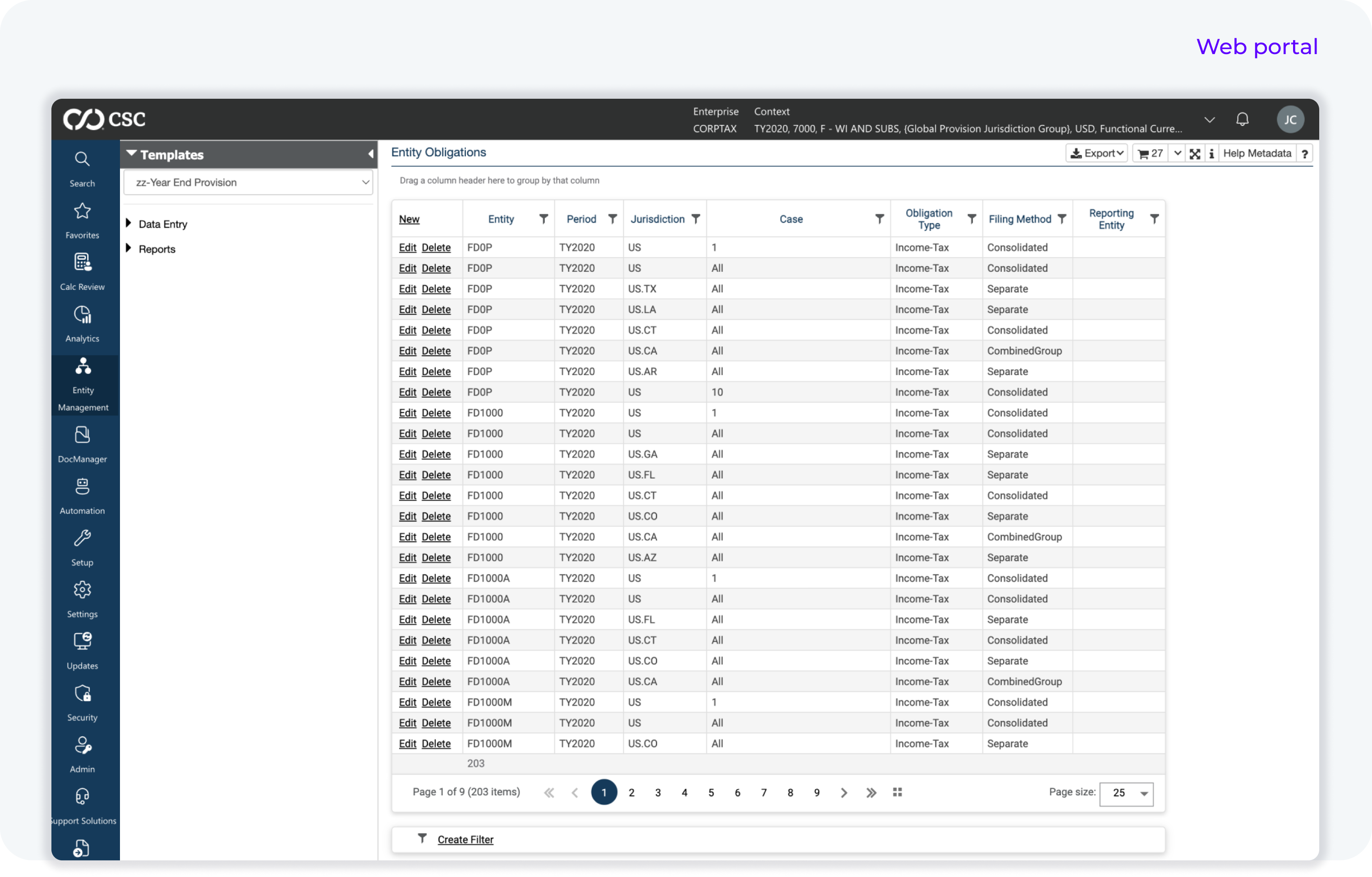
Web portal failed to gain adoption because it simply mirrored the legacy desktop app
1 — Obligation creation and updates relied entirely on manual data entry, making the process slow and inconsistent.
2 — There was no way to see all obligations in one view — users couldn't tell what was due, what was at risk, or who owned what.
Opportunities
1 — Reduce manual effort — streamline how obligations are created and updated, minimizing repetitive data entry and errors.
2 — Surface what matters — give users a clear, responsive view of their obligations so they can immediately see what needs attention.
3 — Build toward intelligence — design an experience that can incorporate AI-driven insights over time.
Research
Research through talking to actual users
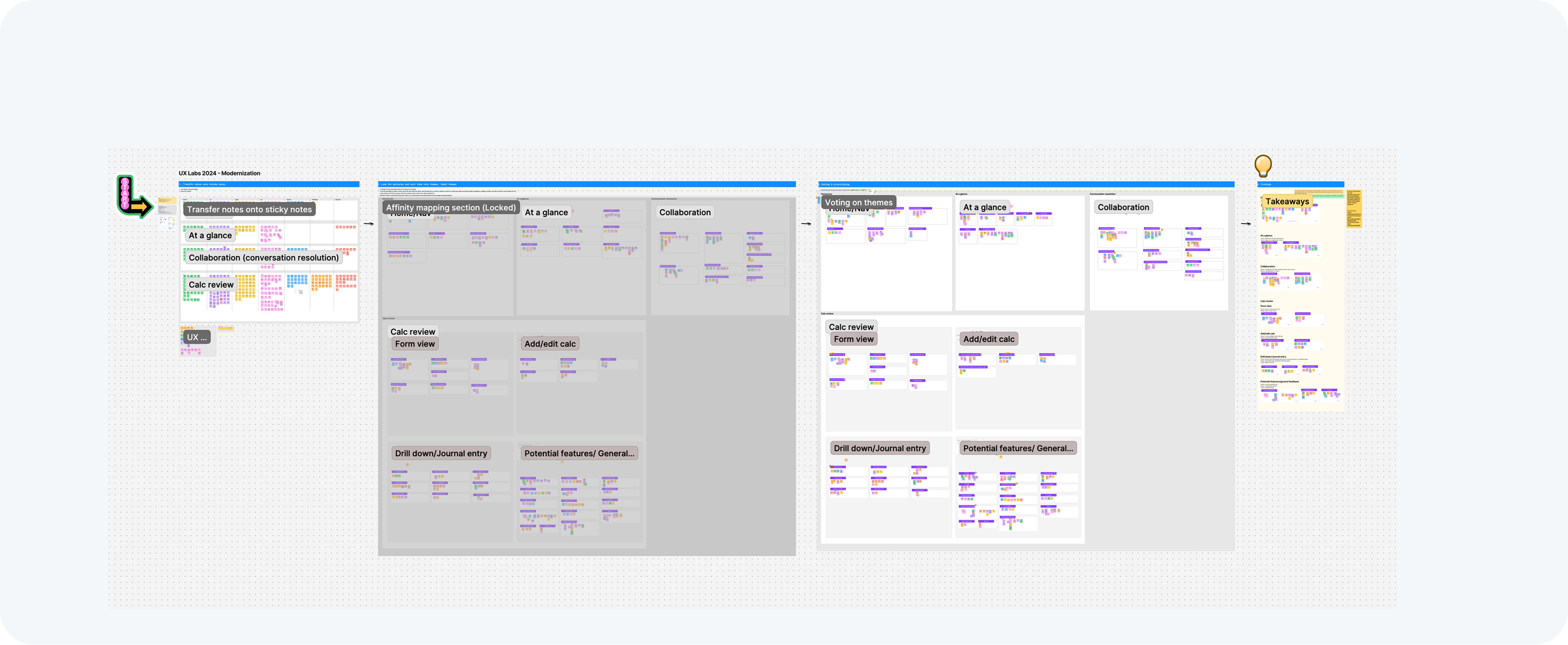
Corptax CONNECT, the company's annual user conference, gave us a direct line to the people we were designing for. We ran demo feedback sessions with tax professionals on the ground, showing early concepts and listening to how they reacted.

Research to insights
Through affinity mapping, we clustered raw observations into patterns — surfacing the themes that kept coming up across different users and conversations. What started as scattered feedback became a clear set of insights that guided every design decision moving forward.
Setup was so painful, users never got to the real value
The product's goal was simple — give tax professionals a clear overview of everything happening across their team. But getting there required manually entering thousands of entities from scratch. Most users hit that wall and walked away before they ever saw what the tool could do.

Insights
Give users a head start, not a blank slate
Starting from zero for every obligation was the biggest reason users walked away. Letting users get to a working state fast, then adjust from there.
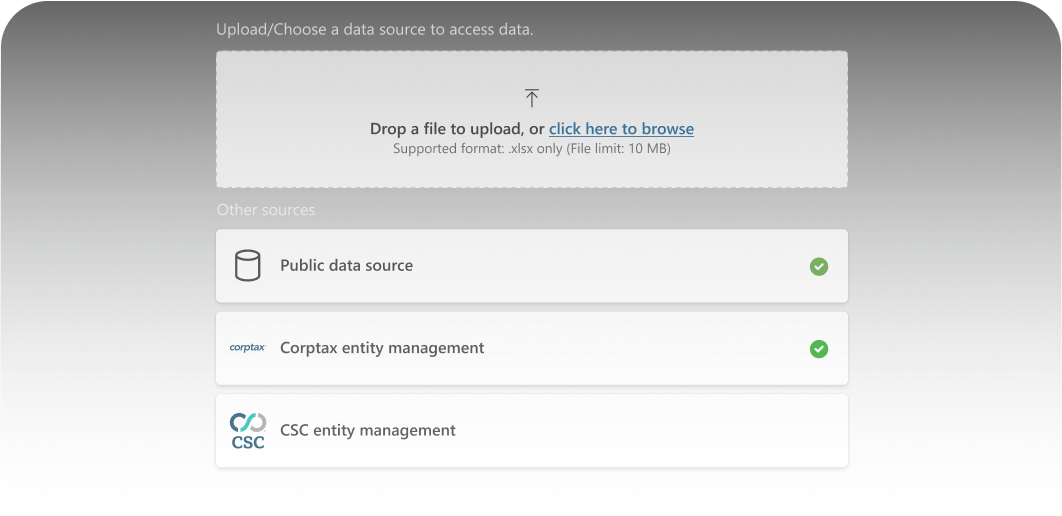
1 — File import — users can upload existing entity data directly or set up integration, skipping manual entry entirely.
2 — Rule-based templates — jurisdiction rules are pre-configured, so users select and apply rather than type from scratch.
Let AI catch what humans miss
With hundreds of entities and dozens of jurisdictions, it's easy for obligations to slip through unnoticed. AI can proactively flag what's missing before it becomes a compliance problem.
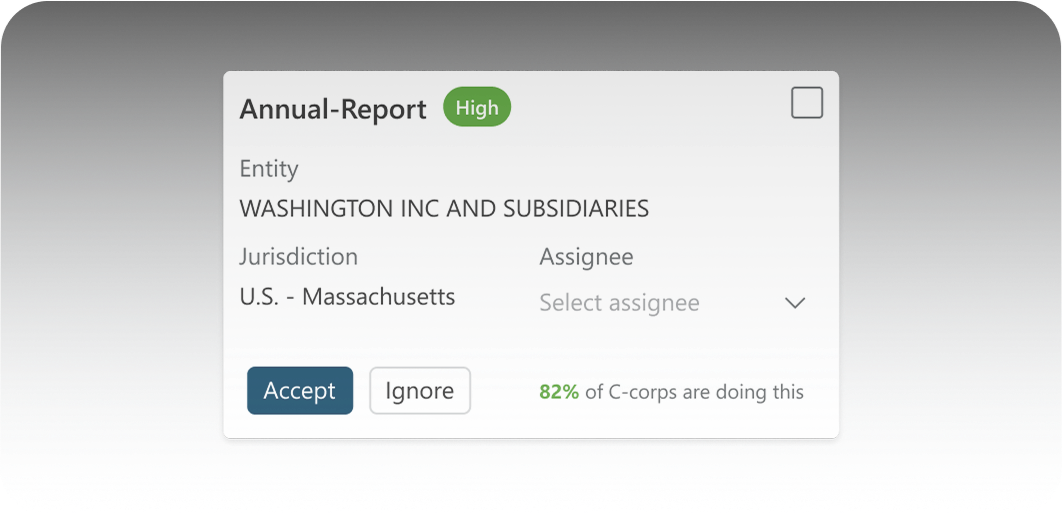
3 — Smart obligation suggestions — based on an entity's profile, AI recommends obligations the user likely needs but hasn't added yet.
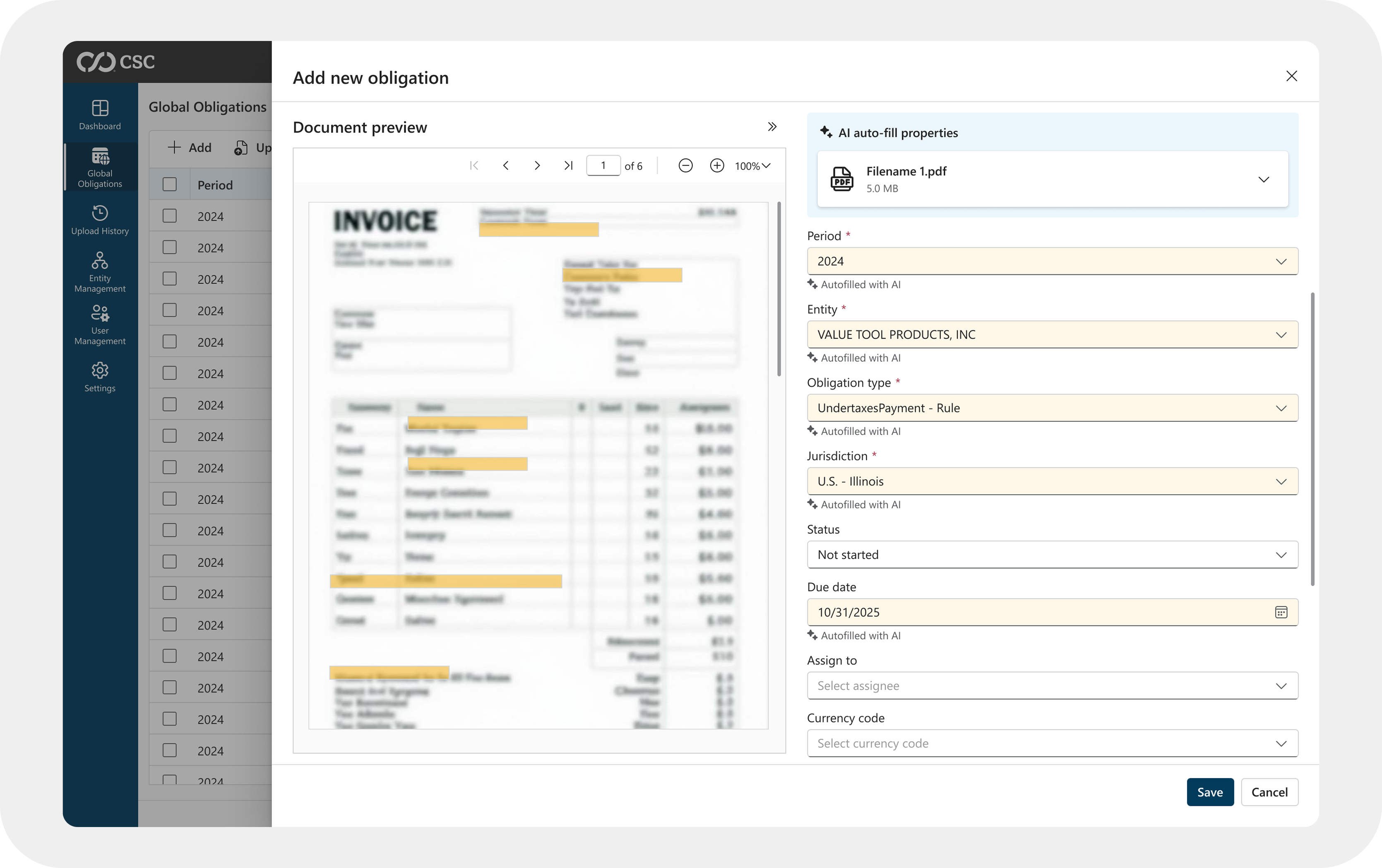
4 — Document scanning — users upload a document and AI reads it, extracting the relevant obligation details automatically.
Solution 1
Get started fast with seamless data import
Flexible data source — Users can upload directly from an Excel file or connect to an existing data source. For those starting fresh, a public dataset is available to pull from immediately.
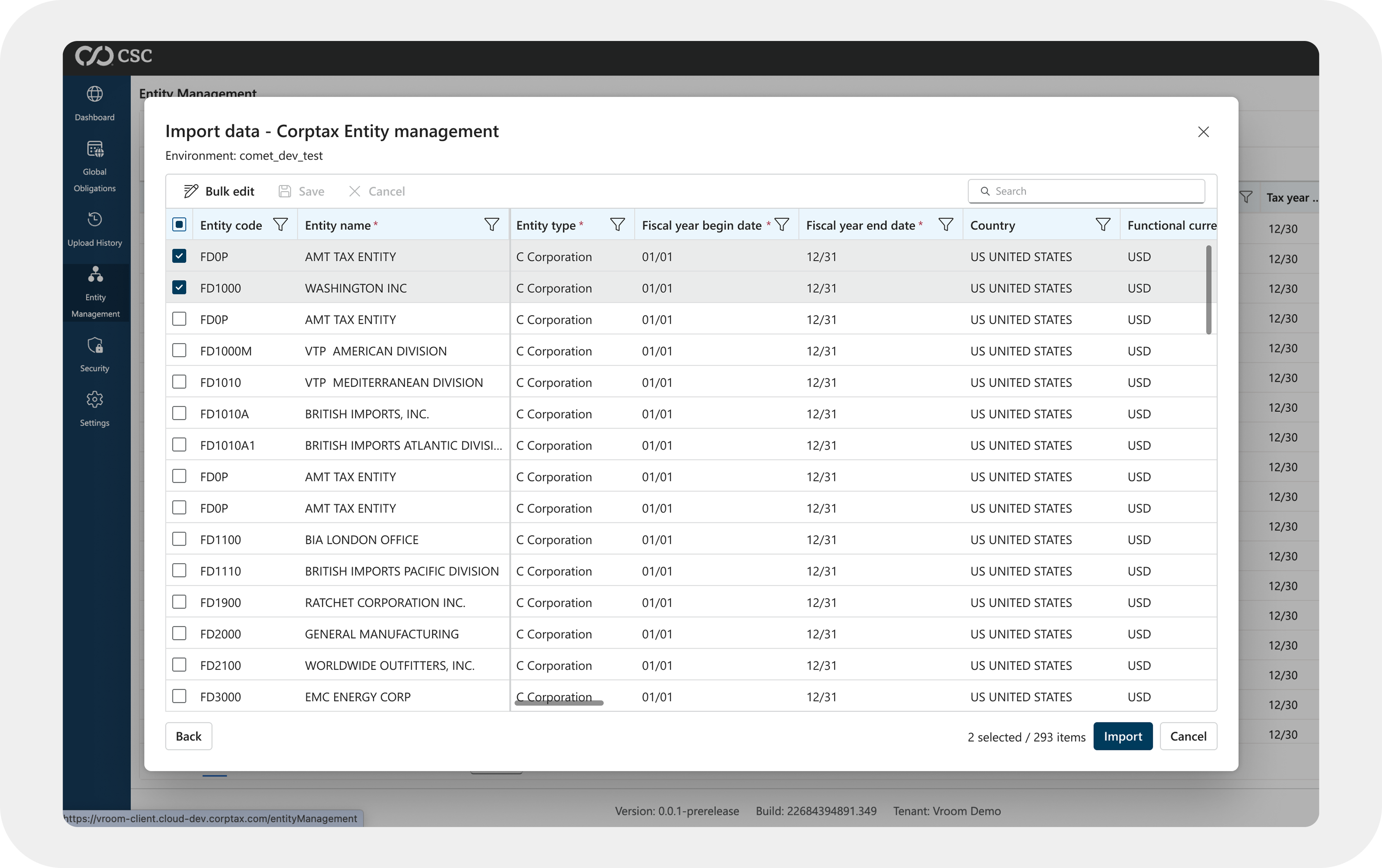
Preview and select — Users see all available entities upfront and can select exactly what they want. Inline editing and bulk edit let users make changes on the spot, so data arrives clean and ready to use without a separate cleanup step.
Solution 2
AI-assisted setup and gap detection
AI identifies obligation gaps — AI compares existing obligations against jurisdiction rules and automatically identifies anything that's missing. Instead of relying on memory or manual cross-referencing, users get a clear picture of where their obligations fall short.
Upload and let AI do the reading — Users upload a document and AI scans it automatically, extracting all relevant obligation details without any manual interpretation.
Solution 3
Full obligation oversight, built for scale
Grid built for scale — With 10,000+ obligations to manage, status indicators make it immediately clear what's overdue, due soon, or complete. Filters, search, and sorting by priority or deadline let users cut through the noise and focus on exactly what needs their attention.
Dashboard tells the whole story — A high-level summary gives users and managers an instant read on where everything stands. Instead of scrolling through thousands of rows to understand the big picture, users get the answer at a glance and can drill down only when needed.